
On Wednesday, I had the profound pleasure of moderating a Minnesota Interactive Marketing Association (MIMA) event on the topic Digital Reputation Management, a topic that is a core focus of my company (and me personally) in 2009.
A Weber Shandwick proprietary analysis revealed that over three-quarters (79 percent) of the world’s number-one most admired companies lost their crowns over the past five years in their respective industries.
Reputation loss is also on the rise. Nearly 9 out of 10 business executives participating in our Safeguarding Reputation™ survey agree that susceptibility to reputation damage is a growing threat.
Similarly, a sizable 84 percent of global senior executives surveyed by the Economist Intelligence Unit reported that reputation risk increased significantly over the past five years. When executives were asked to choose among 13 risk types, reputation risk emerged as the most significant threat to global corporate business.
As company, brand and product reputations fluctuate and/or deteriorate worldwide, communicators need to proactively engage reputation radar systems to identify, track and respond to approaching reputation threats, as well as find ways to locate and empower brand advocates.
This is definitely a topic which our interactive marketing community needs to be active (especially proactive) in discussing, exploring and collaborating. What a great panel topic!
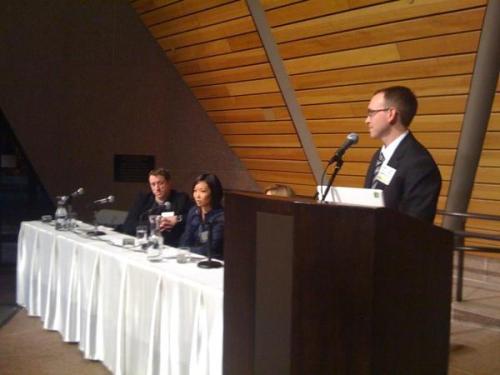
Our star-studded panel constsited of Tammy Lee Stanoch, VP Corporate Communications for Delta/NWA, Lela Phommasouvanh, Senior Consultant, Search Marketing for FindLaw, a Thomson Reuters Business, and Steve Bendt, Social Technology Activist for Best Buy, Inc.
More than 250 attendees absorbed tips about tracking buzz, making the business case to leadership and the imperative “Set Up a Google Alert for your name and your clients’ names” mantras. If you missed the event, you can stream the archive here.
Gems from the discussion:
- Be authentic
- Be transparent
- Be cautious, but fearless
- Don’t be stupid
- Don’t be unethical
- Trust your employees and your customers
- Realize you don’t have control, but put forth measures to proactively inoculate detractors and engage advocates
The panel put together a list of suggested reading links on del.icio.us here, and also mentioned the following resources to research, check out, use or peruse:
- Best Buy Connect (BBY Employee Aggregator)
- Blue Shirt Nation (BBY’s Internal Social Network)
- Spy (can listen in on the social media conversations you’re interested in)
- Twitter Search (Twitter search tool that includes RSS feeds)
- RipOff Report (central place to enter complaints about companies and individuals who are ripping people off)
- Yelp (User Reviews and Recommendations of Top Restaurants, Shopping, Nightlife, Entertainment, Services and More)
- Radian6 (tools for real-time social media monitoring and analysis designed primarily for PR and Ad agencies)
- Trakur (online reputation monitoring tool designed to assist you in tracking what is said about you on the internet)
- FlyerTalk (the world’s most popular frequent flyer community)
- LinkedIn (a networking tool that helps you discover inside connections to recommended job candidates, industry experts and business partners.)
- ZoomInfo (a Web-based service that extracts information about people and companies from millions of published resources)
- Spock (the world’s leading people search engine)
- Cluetrain Manifesto (suggestion from audience that everyone should read it, and I concur)
- Addictomatic (suggestion from the audience)
I also recommend:
- OMGILI (research tool that finds consumer opinions, debates, discussions, personal experiences, answers and solutions)
- PopURLS (the aggregator of the aggregators, which you can set a bookmark for specific keyword/industry terms)
- And a whole host of other resources that can be found on this post from July’s Information Overload MIMA event.
If you have others to share, please include them in the comments.
UPDATE:
Steve Bendt has a recap post here.
 GREG SWAN